20세기, 라는 소년 A BOY CALLED THE 20TH CENTURY
1.
20세기에 우리 모두는 소년이었다. 그래서 우리는 미숙하고, 난폭하며, 어리석었다. 20세기는 소년의 세기였으므로, 우리는 대체로 유치하고, 일정 부분 졸렬하고, 아이답게 교활했으며, 천진난만 했다. 20세기는 홍역을 앓는 소년의 세기였고, 앓는 아이인 만큼 가여웠지만, 무자비했다.
20세기에, 너무 많은 사람이 죽임을 당했다. 줄지어 가는 개미떼 위에 촛농을 떨어뜨리는 아이처럼, 우리는 아무 생각 없이 서로를 죽였다. 합리적인 삶을 꿈꾸었던 짧은 시간이 지나고, 우리는 자신들의 전 지구적 욕망을 위해 서로의 합리화를 눈감아주었다. 그리고 지리멸렬해졌다.
2.
식민의 끝에서 동족끼리의 대규모 전쟁을 겪고, 제대로 추모되지도 못한 주검들을 등에 지고, 살아남은 사람들은 ‘생존’을 위해 살았다. 생존에서 생활로 넘어가려는 시기, 1960년대의 중반에 태어난 작가에게 20세기는 무엇이었을까? 시대가 바로 상처이자, 욕망하는 기계 같았던 시간 속에서 ‘자신의 소년기’를 맞은 작가에게 그 시간들은 어떻게 각인되었을까? 공성훈의 작업 앞에서 나는 자문(自問)한다. 그러자 ‘근대화’라는 단어가 떠오른다. 그리고 나는 다시 ‘조국 근대화’라는 박정희 시대의 ‘말’을 덧붙인다. 웃음이 나오지만 입이 비리다. 국민교육헌장을 외우고, 국기에 대한 맹세를 ‘맹세’하고, 연도에 서서 태극기를 흔들고, 총화단결해서 잘 살아보세를 염불처럼 외웠다. 그러자 수십 년 뒤 ‘짜잔’하고 일산에, 장흥에, 여기에, 저기에 혼성모방형 ‘러브호텔’이 우후죽순처럼 생겨났다. 러브호텔처럼 생긴 예식장이 생겨났으며, 그런 구조의 집들과 공원들과 거리가 생겨났다. 우리 마음의 기념비들.
공성훈의 작업은 그것을 인화(印畵)한다. 그것들이 만들어진 ‘인공적’이라는 방법론을 원용하면서, 그걸 더 극단적으로 밀어 붙인다. 그것이 작가에게는 매혹이고 혐오이다. 그리고 그것은 작업이라는 행위 이전에 작가의 육체에 남겨진 실존의 자국이다.
되풀이 하자면, 공성훈의 작업은 남한의 역사 (여기 서의 남한은 남 / 북한의 ‘남한’이 아니라, ‘북’, 없는 진공의 남한을, ‘굳이’ 의미한다.) ‘남한 근대화’의 역사에 대한 진술이다. 작가는 을씨년스러운 시간들을 포개서, 가장 비역사적인 장면에서 역사를 끌어내고, 재구성해서 우리 앞에 펼쳐 놓는다. 날렵한 솜씨다.
3.
공성훈은 시간에 날렵하게 대응하는 작가다. 시간에? 아니, 문제에.
이번 전시 팸플릿의 뒤에 적혀 있는 연보를 보니, 이 전시가 열번째 개인전이다.
그 전시들의 제목을 보면서 나는 작가에 대한 내 인상이 맞는 것 같아서 내심 즐거웠다. 작가는 자기가 본 시간에 대해 대응하고, 발언하고 있었다.
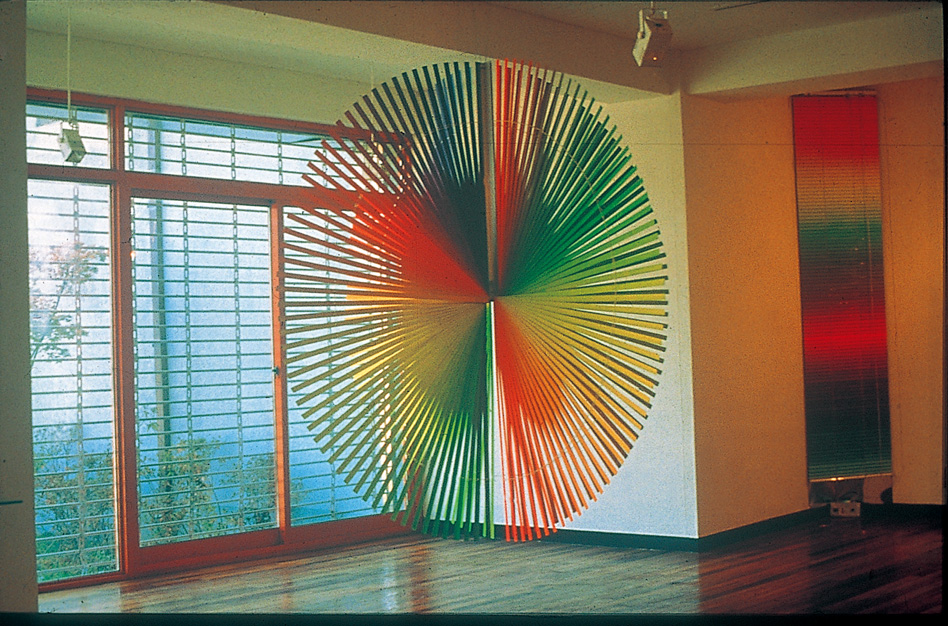
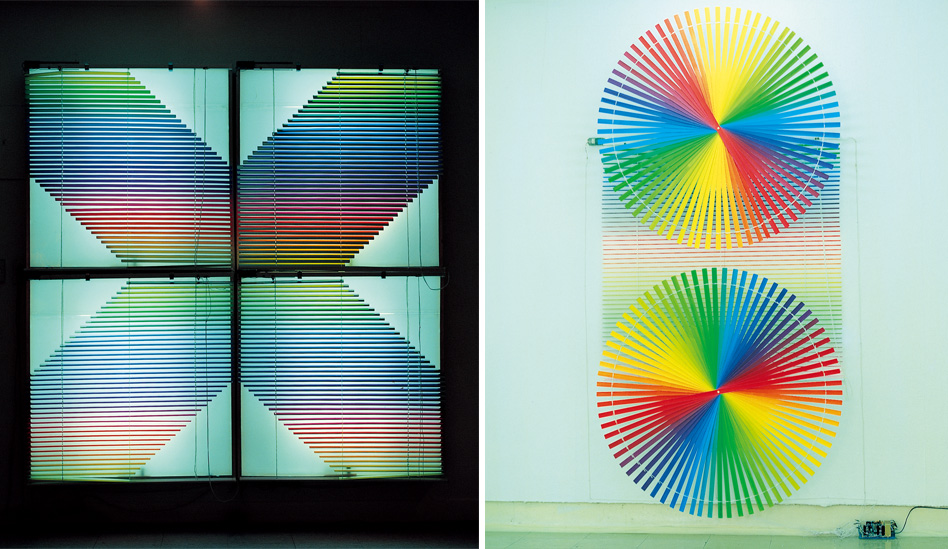
91년: 「Blind-work」-한때 작가는 Blind라고 불리우는 ‘창문가리개’를 가지고 작업했다. 그 중성적인 물질에 무지개 색도 칠하고 둥그렇게 겹쳐 놓기도 하고, 하면서, 작가는 ‘창문가리개’를 가지고 ‘놀았다’ 이 ‘장님놀이’는 놀이의 대상이 Blind였으므로, 그 시절 마구 번지기 시작한 ‘포스트모던’이라는 유행가에 대한 냉소이자, 자신의 작업과 자신의 위치에 대한 알리바이였다. 그는 놀면서 자신의 작가됨에 대한 알리바이를 확보했고, 확보된 알리바이만큼 상처 입었을 것이다. 놀 수 없는데 놀았기 때문에 그걸 견디려면, 그는 자신의 존재를 반쯤 지워 투명해지거나, 느물댈 정도로 뻔뻔스러워져야 했을 것이다. 그의 세번째 개인전 제목이 ‘발버둥’인 것으로 봐서 그의 태도는 전자였을 것으로 보인다.
93년: 「완벽한 Realty, 완벽한 평면성을 위한 Project」 -형용모순, 거짓말. 작가는 문자 그대로 새빨간 거짓말을 통해 실재하지 않기 때문에 유추할 수 있는 어떤 ‘개념’을 구상 / 제시 해보려던 것이 아니었을까? ‘Realty’, ‘평면성’이라는 단어가 함축하고 있는 우리 미술의 사정, 우리 미술의 난잡한 생태계에서 이 두 단어가 갖고 있는 무게, 뭐 이런 걸 ‘완벽한’ 이라는 수사의 개그로 무력화시키고, ‘Project’라는 유행어를 통해 해체한다, 는 전략. 이건 동시대 미술의 어설픔에 대한 작가의 발언이자, 더 나아가 정말로 ‘완벽한 Realty, 완벽한 평면성’을 구현해 보겠다는 ‘작가적 야심’의 시발점이었던 것 같다.
공성훈의 작업 중에 <개방과 국수> 라는 것이 있다. 開放과 國粹를 그는 ‘개방-개집’ 안에 뻘쭘하게 놓여 있는 가락국수 그릇으로 바꿔치기 했다. 조잡하게 만들어진 플라스틱 개집과 그 안에 퉁퉁 불어터진 국수와 국수 그릇. 이 pun을 pun으로만 볼 수 없었던 이유는, 작가가 같은 시대의 언술행위에 대해 그토록 심한 모멸감을 표현 했다면, 그가 가지고 있는 우리 역사에 대한 회한의 무게가 상당할 것 같다는 생각 때문이었다. 차가운 시선 밑에 깔려있는 뜨거운 좌절감을 본 느낌이랄까.
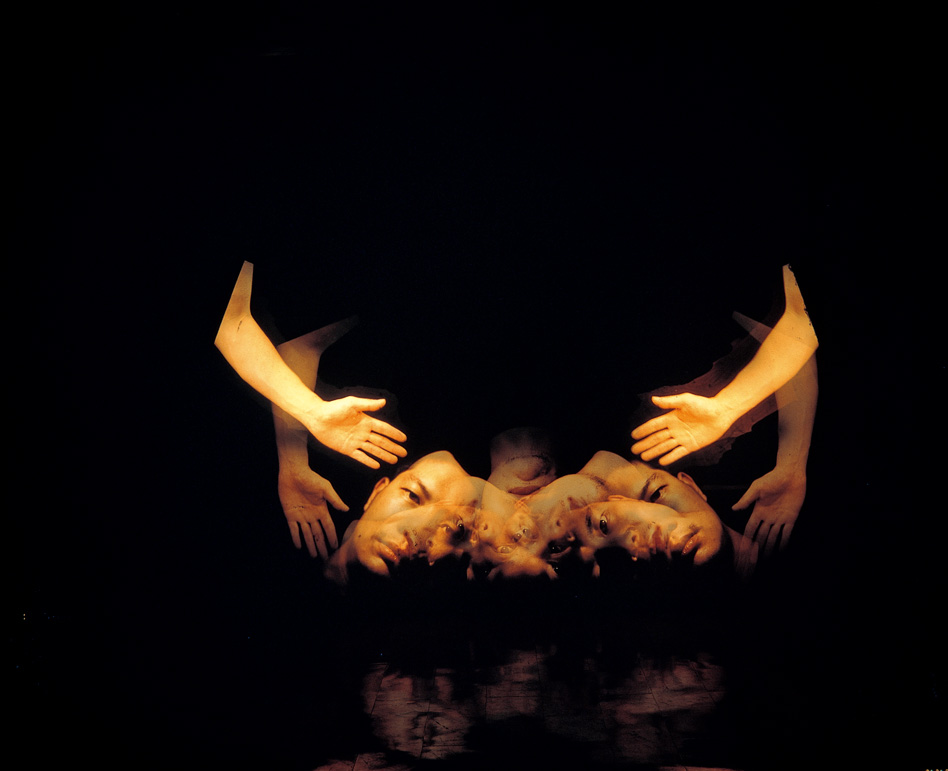
97년: 「발버둥」-공성훈의 작업은 대체로 양가적이다. 코믹하고 비참하다. 이 전시 즈음에 들은 바로는 작가는 벌레처럼 기어가는 자신의 초상을 환등하기 위해 직접 환등기를 만들었단다. 한 80개 정도. 그런 걸 단 한개도 만들어 본 적이 없는 나로서는 그 일이 얼마만한 노역인지 잘 상상이 가지 않는다. 하지만 심한 노동 이었음은 분명하다. 왜 그랬을까? 경제적 문제 등 실제적 문제가 있기도 했겠지만, 그보다 그 노동을 하고 있는 자신의 ‘발버둥’을 자벌레처럼 기어가는 영사된 이미지에 겹쳐 보이려는 것은 아니었을까. 똑같은 걸 만들어내는 단순 노동과 그 노동의 결과로 보여지는 단순한 영상. 벌레化된 자신을 보여주는 ‘노출증’과 그것의 진정성을 증명하기 위한 반복 노동의 순환. 코믹한 것의 비참함과 비참한 것의 코믹함이 맞물려 있는 고리. 나는 그 순환이 이 뒤로 전개될 공성훈의 ‘밤’에 조금 다른 형태로 내재되어 있다고 생각한다.
2000년: 「개, 밤」-글을 쓰려고, 공성훈에 대해 사람들은 어떻게 생각하고 있나, 싶어서 어느 포털 사이트에 ‘공성훈’이라고 치자 재미있는 글이 하나 떠올랐다. camel이라는 분의 블로그에 있는 글인데 조금 길지만, 인용해 보겠다.
“(전략)본래 설치미술 분야의 작품 활동을 하던 그가 갑자기 복고적 성향의 회화작품을 선보였다는 이유 때문이다. 미술작가이자 평론가인 박찬경이 <공성훈의 배신> 이란 표현을 사용하면서 그의 그림들을 직접적으로 공격하였다. 21세기 포스트모던 시대에 순수회화 (그는 그것을 회화-회화라 표기하였다)란 것이 대체 무슨 소용이란 말인가? 그가 퍼부은 공격의 내용은 바로 그 한마디로 간단히 요약될 수 있을 것이다. 그러나 그에 맞선 공성훈의 입장은 너무나 확고하며 분명하다. 그는 우선 회화가 브레히트적 의미의 비판적 거리를 유지하지 못한다는 박찬경의 비난을 자신이 사용했다는 이른바 <글레이징> 이란 형식기법으로 대응하고 있다. 그런데 그것이 <번들 거리는> 호마이카 광택제를 입힌 것 같은 고전 서양화의 이상한 유화 표면을 지칭하는 것이라면, 나도 이 자리에서 자신 있게 말할 수 있다. 그로 인해, 그림틀 속의 그것은 실물이 아니라 그림이며 가공적 표현물이란 사실을 분명히 일깨워 주었노라고.(후략)”
나는 공성훈과 박찬경이 이런 말들을 주고 받았 었는지는 몰랐다. 이 글을 보고, 이 요약된 내용보다는 좀 더 풍부한 말들을 주고받았겠거니, 생각하면서도, 왠지 피차 좀 궁색해 보였다. 그리고 그림의 존재 조건에 대한 오해와 곡해의 변주라는 생각도 들었다. 우리가 솔거 시대에 사는 것이 아닌 이상 그림이 일종의 ‘버츄얼 리얼리티’라는 것은 자명한 것이고, 그것은 이미-선험적으로-세계를 대상화 하는 것이다. 거기에 대한 공론이 왜 필요하단 말인가. 우리는 왜 이렇게 측은한가.
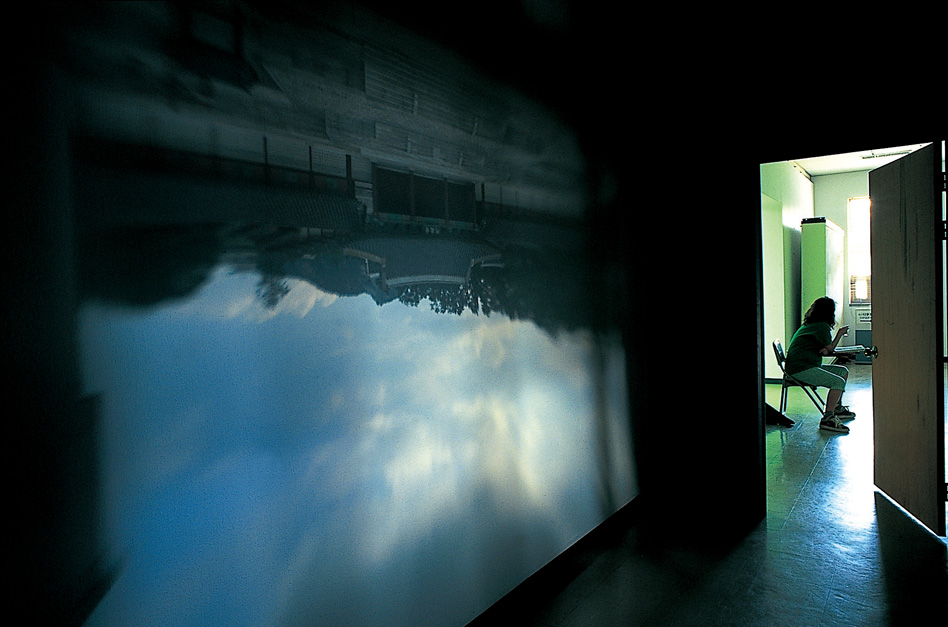
공성훈이 회화, 또는 회화-회화로 돌아, 혹은 그냥 들어온 것은 앞서 내가 ‘야심'이라고 말한 ‘완벽한 Realty, 완벽한 평면성을 위한 Project'에 진지하게 대답하기 위해서라고 생각한다. 이 모순이 해결될 유일한 장소로서의 그림이라는 물리적 조건 때문에.
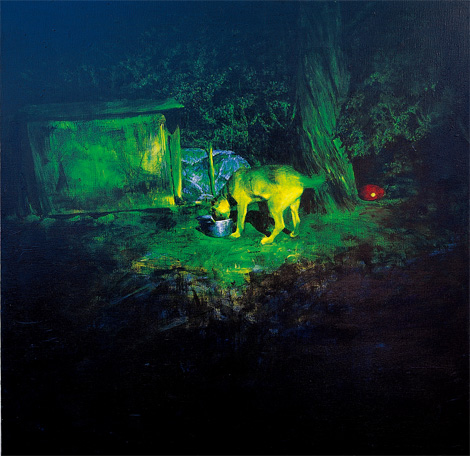
개와 밤은 은유일까? 이만큼 통속적 모티브가 어떤 상징으로 차용됐다면, 그것은 작가가 아직 자신이 말하고자 하는 세계 앞에서 멈칫거리고 있는 것이라고, 그러니까 그림의 시운전(試運轉) 중이라고 생각했다. 특정할 수 없는 포괄적 세계의 앞.
두어 번 가본 공성훈의 벽제 집에는 개가 많았다. 그게 작가가 기르는 개인지, 떠돌아다니는 주인없는 개인지는 물어보지 않았지만, 하여튼. 그림의 대상으로서의 개와 밤. 밤은 집중된 평면이고, 주변에 개가 많으니까, 작가 입장에서는 리얼리티와 평면성 (평면성 너머의 공간을 포함한 평면성)을 시험해 보기에 좋은 대상이라고 생각했을 것 같다.
2001년부터 2005년까지: 「벽제의 밤」-작가는 이 제목으로 무려 5번의 개인전을 했다. (2002년 베를린 에서의 전시 제목은 「Night View around My Home」이었다. 그러니까, 벽제의 밤, 이었다) 매년 1번씩 ‘벽제의 밤'으로 개인전을 한 셈이고, 「개, 밤」까지 이 작업의 범주에 넣는다면 9번의 개인전 중 6번을 벽제와 밤이라는 주제로 한 것이 된다. 대체 ‘벽제의 밤'의 무엇이 작가를 이만큼 집중하게 했을까. 나는 3가지 정도의 이유를 생각해 본다.
밤의 평면성, 벽제의 사실성, 그리고 ‘벽제의 밤'의 역사성. (집과 가까운 장소라는 편의성도 있겠으나, 그 부분은 생략하자-그게 얼마나 중요한건데, 라는 공성훈의 딴청 피우는 목소리가 들리는 듯 하다. 하지만 어쨌든.) 이 이유들은 작업에서 순차적으로 탐구되고, 진행되며, 공존한다.
그림이 평면이라는 건 누구나 알고 있다. 착시가 공간을 만든다는 것도. 밤은 무한한 공간이면서 동시에 어둠이라는 벽에 의해 평면적으로 보이기도 하는 뒤틀린 착시의 공간-평면이다. 아무 것도 지시하지 않지만, 존재하는 개의 실존이 이 밤의 평면성을 강화하면서, ‘그림이라는-평면-속의 그려진 공간-속의 밤이라는 평면-을 강조하는 개'라는 기호의 연쇄반응에 의해 ‘가상 평면', 아마도 ‘환시 (幻視)'로 대상화된다. 그림이 환(幻)이라는 상식을 작가는 자신의 작업을 통해서 다시 검증한다. 이 시대에 그림을 그린다는 행위가 떠안고 있는 노심초사는 이 검증작업의 이면일 것이다. 표면의 광택처리는 그 검증의 기술적인 부분이자, 마침표일테고.
벽제의 밤은 남한의 심리적 투사물 같다. 그만큼 보편적이다. 남한이라는 구조의 實寫적 재현이다.
‘벽제'는 실제의 지명이고, 가상의 지명이다. 그곳은 변두리인 것도 아니고, 변두리가 아닌 것도 아닌, 도시도 아니고, 농촌도 아닌, 비농비도(非農非都) 조차 아닌, 중심이 없어졌기 때문에 중심이 아니면서, 중심 아닌 것도 아닌, 고향 역시 없어졌으므로, 고향도 아니고 타향도 아닌, 그런 공간이다. 우리가 살고 있는 그런 공간의 실재하는 축도(縮圖)다.
너저분한 날(生) 것의 밤. 합리성을 놓쳐버린 근대화 / 현대화는 날 것 그대로의 욕망을 합리화 하면서 시간과 공간을 게토(ghetto)화 시켰다. ‘벽제의 밤‘은 그렇게 역사성을 부여 받는다-획득한다.
4.
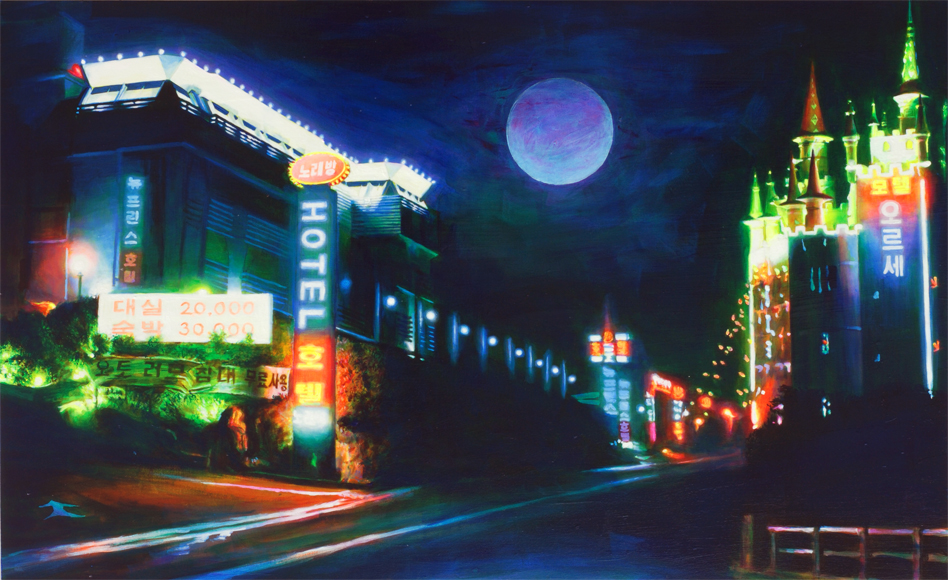
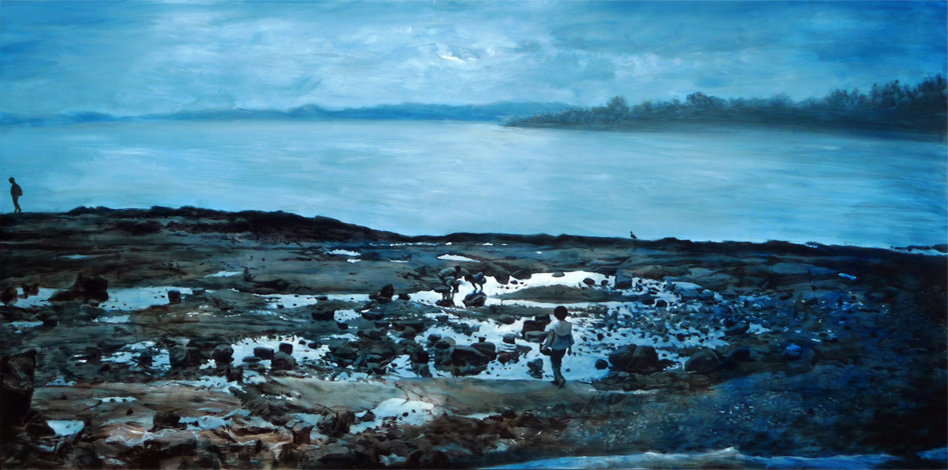
이번 전시의 제목은 「교외 ; 여가」이다. ‘벽제의 밤'이 일단락된 것이다, 라고 나는 생각한다. 작가는 두드려보던 돌다리를 이제 건넌다. 그 다리를 건너서 본 광경이 교외이고 여가이다. 그러나 전시된 그림들은 전시의 제목에 대한 역설들이다. 그려진 대상들은 만들어진 교외(郊外)-그러니 사실은 교내(郊內)-이고, 즐기는 여가가 아니라 즐겨야 하는 강박적 여가를 위한 장치들이다. 교외로 빠지는 도로가, 거대한 공원이, 모텔들이, 기념비가, 운동장이 그렇다. 이번 전시된 그림 안에서 유일하게 주체 노릇을 하고 있는, 어딘가에서 일탈해서 낚시를 하고 있는 사람의 배경은 그가 살고 있는 / 그가 살고 있지 못하는 아파트 단지이다. 작가는 지리멸렬한 시, 공간 속에서 자기 위안을 위해 쉼 없이 운동장을 걷는<운동장> , 끊임없이 가족애를 확인하고<호수공원> , 자연 비슷한 것을 만들어내는<호수공원> , 그리고 쉼 없이 사랑을 하는-해야만 하는<모텔> 우리의 초상을 떠낸다.
우리가 우리 자신의 위안부로 전락했다는 사실을, 그 인공적인 세계를 날 것 그대로 보여준다. 중첩된 역설.
작가는 혐오하기 위해 인공적인 것을 날 것으로 강조하고, 강조된 날 것의 인공성에 매혹 당한다. 그것이 공성훈의 작업이 ‘역사'를 재현하는 방식이다. 20세기 후반부터 집중적으로 망가지기 시작한 남한의 모습을 고발하거나, 설명하지 않고, 그것에 매혹되는 실존을 통해 혐오하는 방식. 또는 내면 없는 고통의 조립을 통해 외면이 곧 내면임을 입증하는 방식.
거창하게 말해 나는 그것이 20세기의 후반에 남한에서 소년기를 보낸 사람들의 상처이고, 더 거창하게 말하자면 20세기라는, ‘소년의 세기'가 남긴 상처라고 생각한다. 그렇기 때문에 광기를 가장한 정상인들의 상행위가 난무하는 지금, 짐짓, 정상적인 체 하면서 차가운 광기를 견디는 작가의 방식이, 그런 근본적인 상처에 정직하게 대응하는 하나의 중요한 방법이라고 보았다. 그렇게, 돌이킬 수 없을 것 같은 게토에서, 매혹과 혐오라는 양가적 감정의 순환은 외부가 내부가 되어버린 시대의 광증(狂症)을 들여다보는 하나의 ‘시점'을 제공한다.
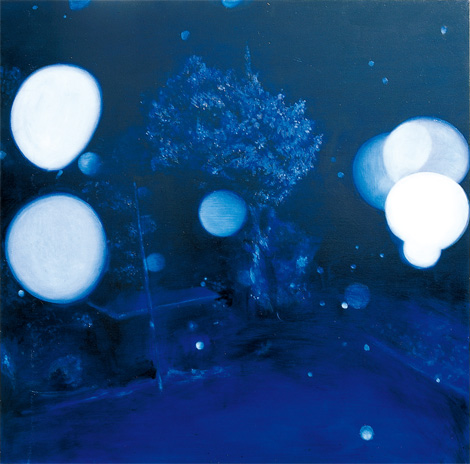
5.
20세기의 악몽을 심화, 발전시키고 있는 것 같은 21세기가 몇 년 흘렀다. 우리는 20세기에 걸렸던 ‘소년의 주술'에서 풀려나지 못하고 있다. 전 지구적으로도 그렇고 한반도라는 특정 장소도 그렇다. 남한이라는 우리 몸이 닿는 삶의 공간은 물론, 그렇다. 우리 몸은 너무 빠른 20세기로의 역진(逆進)에 몸 둘 바를 모르고 있다.
공성훈의 작업은 우리가, 우리의 미성숙을 어떻게 기억하면서, 그것을 살아낼 것이냐, 라고 묻는다. 그러니까, 살아내서 그 ‘미성숙한 합리화'의 역주를 멈추고, 성숙한 삶으로 나아갈 것인가를 인공의 빛 속에서 찾으려 한다. 인공의 빛과 색이 오싹, 하게 아름다울 때는 길 찾기를 위해 그것이 칠해지고, 그 색이 빛으로 비춰지는 순간이다.
황세준 | 작가
월간미술 2007년 3월호
1.
In the 20th century, we were all boys. So we were inexperienced, rough and foolish. Since the 20th century was the century of boys, we were generally childish, awkward in certain aspects, crafty in a child’s sense, and naive. The 20th century was the century of a boy with the measles, and sick as he was, the child was merciless as well as pitiable.
In the 20th century, too many people were killed. Like a kid dropping candle wax on a row of traveling ants, we killed each other without thinking. For a short period of time we dreamed of rational lives; this time passed, and we turned a blind eye to each other’s rationalizations for the sake of our pan-global desires. And then became incoherent.
2.
After a major war between brethren at the end of colonization, and carrying the dead bodies of the unremembered, the survivors lived for “survival.” In a period when people were about to go from survival to life, to the artist who was born in the mid 1960s, what was the 20th century? For an artist who met “his boyhood” in a time when the age was the wound, a hungry machine, how were those times engraved? As I stand before Kong Sung-Hun’s works, I question. The word “modernization” comes to mind. Then I add the “word” of the Park Chung-Hee era, “modernization of the homeland.” I laugh but taste an unpleasant flavor in my mouth. We memorized the Charter for National Education, “pledged” the Pledge to the National Flag, waved flags while standing on the roadsides, and chanted, “Let’s unite and live well together” like a prayer to Buddha. Then after a few decades, just like that, hybrid, imitation-type “love hotels” appeared in Ilsan, in Jangheung, here, there and everywhere, like bamboo growing after the rain. Wedding halls resembling love hotels were built, and houses, parks and streets designed in the same fashion were constructed. Monuments of our minds.
Kong Sung-Hun’s works print these things. While using the methodology of “artificial,” through which they were made, he pushes them to the extreme. To the artist it is fascination and hatred. It is a trace of existence left on the artist’s body, prior to the act of work.
To repeat myself, Kong’s work is a statement about the history of South Korea (in this case South Korea does not mean “South Korea” as in South / North Korea, but “particularly” means the vacuum of South Korea without its “North”), or the history of “South Korean modernization.” The artist overlaps the dreary times, draws out history from the most unhistorical scenes, recomposes them and spreads them before us. This is shrewd skill.
3.
Kong Sung-Hun is an artist who is quick to respond to time. To time? No, to problems.
According to the chronology on the back of his pamphlet for this exhibition, it is his tenth solo exhibition.
As I looked at the titles of his earlier exhibitions, I was happy to think that my impressions of the artist were correct. He was responding and speaking about the times he had seen.
91: 「Blind-work」-At one point, the artist worked with “window shades” called blinds. While painting rainbow colors on the neutral material, and overlapping them in a round shape, the artist “played” with the “window shades.” Since in this “blind game” the subject of the game was “blind,” it could be seen as a cold smile towards the popular song called “Post-Modern,” and an alibi for the artist’s own work and position. While playing, he gained an alibi for his being an artist, but was perhaps injured as well subsequently by the alibi. Because he played even though he was unable to, in order to endure that fact, he would have had to erase his existence about half to become transparent, or become shameless to the extent of insidious. Considering that the title of his third solo exhibition was “Struggling,” his attitude was most likely the former.
‘93: 「Project for Perfect Realty, Perfect Flatness」- paradox, lies. Because the artist literally does not exist through a downright lie, perhaps he was trying to constitute/present a certain “concept” that could be presumed? There are certain situations implied by the words “reality” and “flatness” in the art of Korea, and certain weight these two words carry in the jumbled ecosystem of Korean art. The strategy was to neutralize and dismantle such aspects of the words through the comedy of rhetoric called “perfect,” and the popular word “project,” respectively. This was a statement by the artist on the awkwardness of contemporary art, and moreover, the starting point of “artistic ambition” to realize “perfect reality and perfect flatness.”
Among Kong Sung-Hun’s works, there is something called Open-Doors and Ultra-Nationalism (Gae-bang & Guk-su). Kong replaced the Korean terms for “open-doors” and “ultra-nationalism” with puns which mean “Dog-Room (House)” and “Noodles.” A bowl with swollen noodles in it lies shyly inside a faulty plastic dog house. The reason I could only see this pun as a pun was because if the artist was expressing such a severe sense of contempt towards the language activity of his times, then I thought the weight he felt in our history must also be significant. It was like he saw the hot despair lying under the cold gaze.
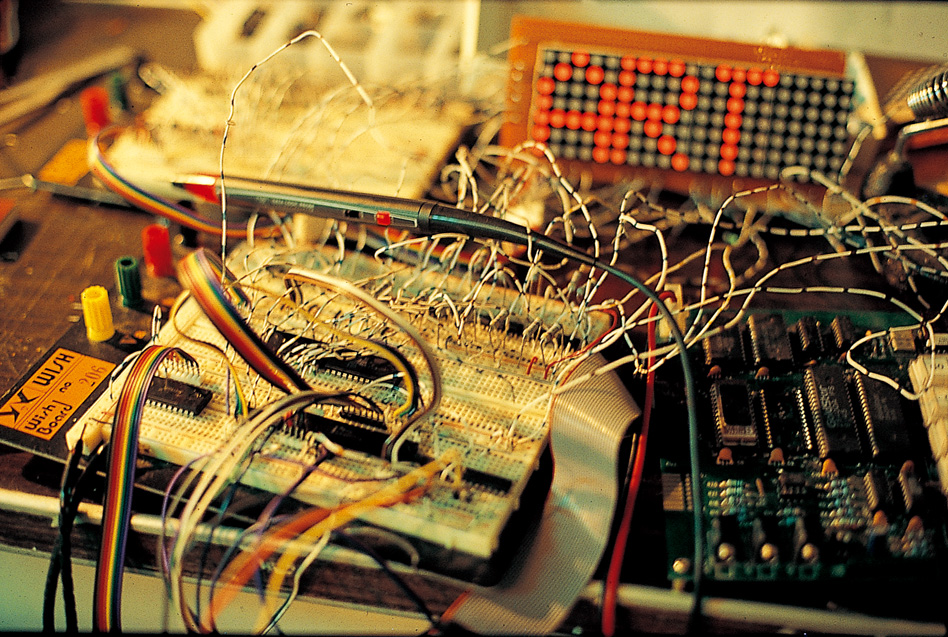
‘97: 「Struggling」- Kong Sung-Hun’s work is generally ambivalent. It is comic and wretched. Around the time of this exhibition, I heard that the artist made his own projectors in order to project images of his self-portrait crawling like bugs. He made about 80 of them. For someone like me who has never made even one thing like that, it is hard to imagine the hard work involved. But clearly it must have been severe labor. Why did he do it? There must have been practical matters such as economic issues, but more likely, it seems that he wanted to overlap his “struggling” labor with the projected image of worms crawling. Simple labor to create identical products and the simple video images resulting from such labor. The “exhibitionism” of showing the “insectized” self, and the circulation of repeated labor to prove its authenticity. Linking together of the wretchedness of comedy and the comic aspects of wretchedness. I believe that such circulation is inherent in Kong Sung-Hun’s Night, which is to unfold hereafter, in a somewhat different form.
2000: 「Dog, Night」- So that I could write, to find out what people thought about Kong Sung-Hun, I typed “Kong Sung-Hun” on an Internet portal site, and an interesting text popped up. The text is from the blog of someone called “camel.” It is a bit long, but let me quote part of it.
「“…he, who had worked with installation art, suddenly presented paintings of reactionary orientation. Artist and art critic Park Chan-Gyoung waged a direct attack on his paintings using the expression ‘the betrayal of Kong Sung-Hun.’ What use is fine painting (he called it painting-painting) in the 21st century post-modern era? The contents of his attack can be summarized in that sentence. But Kong’s position against Park is firm and clear. He responds to Park’s criticism that paintings are unable to maintain a critical distance in the Brechtian sense with the so-called ‘glazing’ technique he used. But if that indicates the strange oil paint surface seen in western classical paintings that resemble ‘shiny’ Formica gloss, I can say with confidence that he clearly enlightened us that what was in the picture-frame was not the real thing but a painting, a fictitious product of expression…”」
I did not know that Kong Sung-Hun and Park Chan-Gyoung had had such a conversation. While looking at this passage, I thought they must have had a fuller conversation than mentioned in the text, but for some reason they both seemed wanting. I also thought it was a variation of misunderstanding and misinterpretation of the conditions for a painting to exist. Since we are no longer living in the age of Solgeo, it is clear that a painting is a sort of “virtual reality,” which is something that objectifies the world transcendentally. Why do we need public discussion about that? Why are we so pathetic?
I believe the reason Kong Sung-Hun came back to, or just came to painting, or painting-painting was so that he could seriously respond to the “Project for Perfect Reality and Perfect Flatness,” which I called “ambition” earlier. This is because of the physical conditions of the painting, as the only place this contradiction can be solved.
Are dog and night metaphors? I thought that if such common motives were adopted as some kind of symbol, then the artist must be hesitating before the world he is trying to talk about. He is test-driving the painting. Standing before a comprehensive world that cannot be specified…
There were many dogs at Kong’s home at Byeokje, where I visited a few times. I did not ask whether they were the artist’s dogs or just strays. Dogs and night as objects of painting… Since night is a focused flat plane, and there are many dogs around, as far as the artist is concerned, they may serve as good material to test reality and flatness (flatness that includes the space beyond flatness).
From 2001 to 2005: 「Night at Byeokje」- The artist held 5 solo exhibitions under this title. (The title of his exhibition at Berlin in 2002 was 「Night View around My Home」. In other words, it was Night at Byeokje.) This amounts to one “Night at Byeokje” exhibition per year, and if we include 「Dog, Night」in this work category, he used the themes of Byeokje and the night in six among his nine solo exhibitions. What was it about the “Night at Byeokje” that made the artist focus so much? I can think of three reasons.
They are the flatness of the night, the reality of Byeokje, and the historical aspect of the “Night at Byeokje.” (Though there is also the factor of convenience, as it is a location near the artist’s home, let us omit that?I feel like I can hear Kong Sung-Hun’s voice saying “But that’s very important…” but anyway…) These reasons are studied, carried out and made to exist in the works in succession.
Everyone knows that a painting is flat. Also that illusion creates space… Night is an infinite space, but is also a space-plane of twisted illusion, which sometimes looks like it is flat due to the wall of darkness. As the dog, which does not indicate anything but simply exists, enforces the flatness of the night, a “virtual plane,” probably a visual hallucination, is objectified through the chain reaction of the sign called “Dog,”emphasizing the flat plane called night in the space painted in the flat plane called the painting. The artist re-verifies the common sense of hallucination through his work. The anxiety held by the act of painting in this era is the other side of this verification process. The gloss on the surface is the technical aspect as well as the full stop of that verification.
Night at Byeokje seems like a psychological projection of South Korea. It is that universal. It is a realistic representation of the structure called South Korea. “Byeokje” is the actual place name, and the virtual place name. It is a space that is not the suburbs, but it is not that it is not the suburbs. It is not the city, not the country, nor is it a non-rural, non-urban area. Because the center is gone, it is not the center, but it is not that it is not the center, either. It is not the homeland, and not a foreign land. It is that sort of space. It is an existing miniature of such a space in which we live.
Night of the shabby raw things… Modernization, having lost its rationality, turned time and space into a ghetto while rationalizing its raw desires. “Night at Byeokje” thus is given-acquires?historical context.
4.
The title of this exhibition is 「Outskirts. Leisure」. “Night at Byeokje” has been settled, I thought. The artist now crosses the stone bridge he has been just tapping on. The scene he sees on the other side of the bridge is the outskirts and the leisure. But the exhibited paintings are paradoxes of the exhibition title. The objects painted are manufactured outskirts?actually “inskirts”?and the leisure is not something enjoyable, but devices for a compulsive leisure, which must be enjoyed. This is evident in the roads leading out to the suburbs, the gigantic parks, the monuments, and the sports arenas. The background of the only person who is acting as a subject in the exhibited works?a person evading some sort of duty to indulge in fishing?is the apartment complex in which he lives / in which he is unable to live. The artist lifts out our portraits from Sports Arena, where people walk continuously for self comfort within incoherent time and space, Lake Park, where family members endlessly confirm their love in a creation similar to nature, and Motel, where one loves / must love without end.
He shows that we have fallen as our own comfort girls, and reveals this artificial world. It is an overlapping paradox.
The artist stresses artificial things as raw things in order to hate, and is captivated by the artificiality of the emphasized rawness. That is how Kong Sung-Hun’s works represent “history.” It is a method that does not accuse or explain the appearances of South Korea, which has been intensively destroyed since the late 20th century, but hates them through an existentiality that is seduced by them. Or perhaps it is a method that proves that the outside is in fact the inside through an assembly of pain without an inner aspect.
To exaggerate slightly, I think they are the scars of those who spent their boyhoods in South Korea in the late 20th century, or to exaggerate even more, scars left by the “century of boys” known as the 20th century. Therefore, in an era filled with commercial activities by normal people posing as insane, it seems that the way of the artist, who endures cold insanity by pretending to be normal, is an important method of responding to such fundamental scars. Thus, in a ghetto which cannot be reversed, the ambivalent circulation of emotion called seduction and hatred provides a “viewpoint” to look into the madness of the era in which the external became the internal.
5.
Several years of the 21st century have passed in a fashion that seems to aggravate and develop the nightmares of the 20th century. We are still unable to free ourselves from the “spell of the boy” that was cast upon us in the 20th century. This is so in terms of the whole world as well as the Korean peninsula. Of course it is also the same with the space of life where our bodies touch, known as South Korea. Our bodies are at a loss in the rapid retrogression towards the 20th century.
Kong Sung-Hun’s works ask us how we are going to remember our immaturity and live through it. In other words, we should live to stop the retrogression of “immature rationalization” and find out how to advance toward a mature life in the artificial light. When the light and colors of artificial light are so beautiful that they give us the shivers, that is the moment when they are painted so that we may find the path, and when the colors are shining with light.
Hwang Se-Jun | Artist
The Art Magazine WOLGANMISOOL March 2007