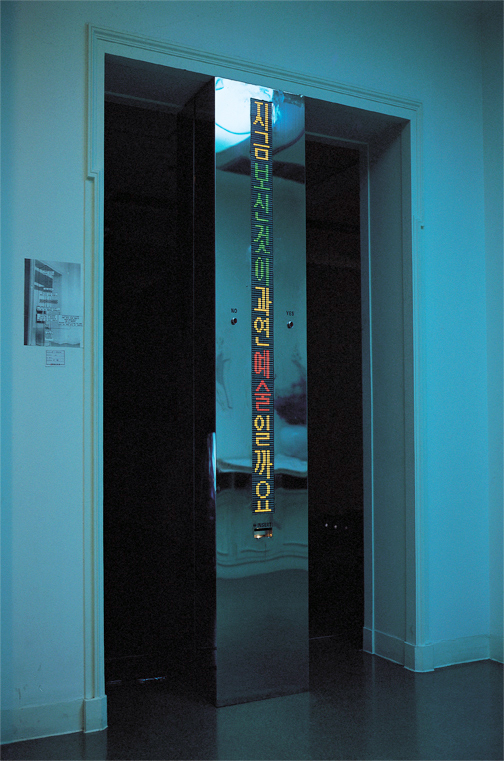
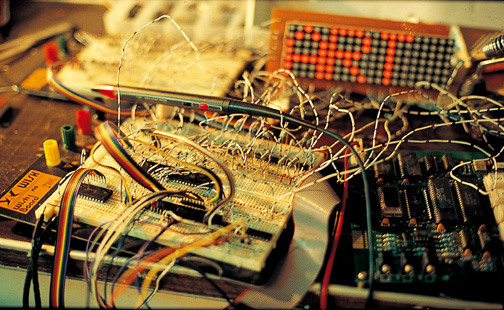
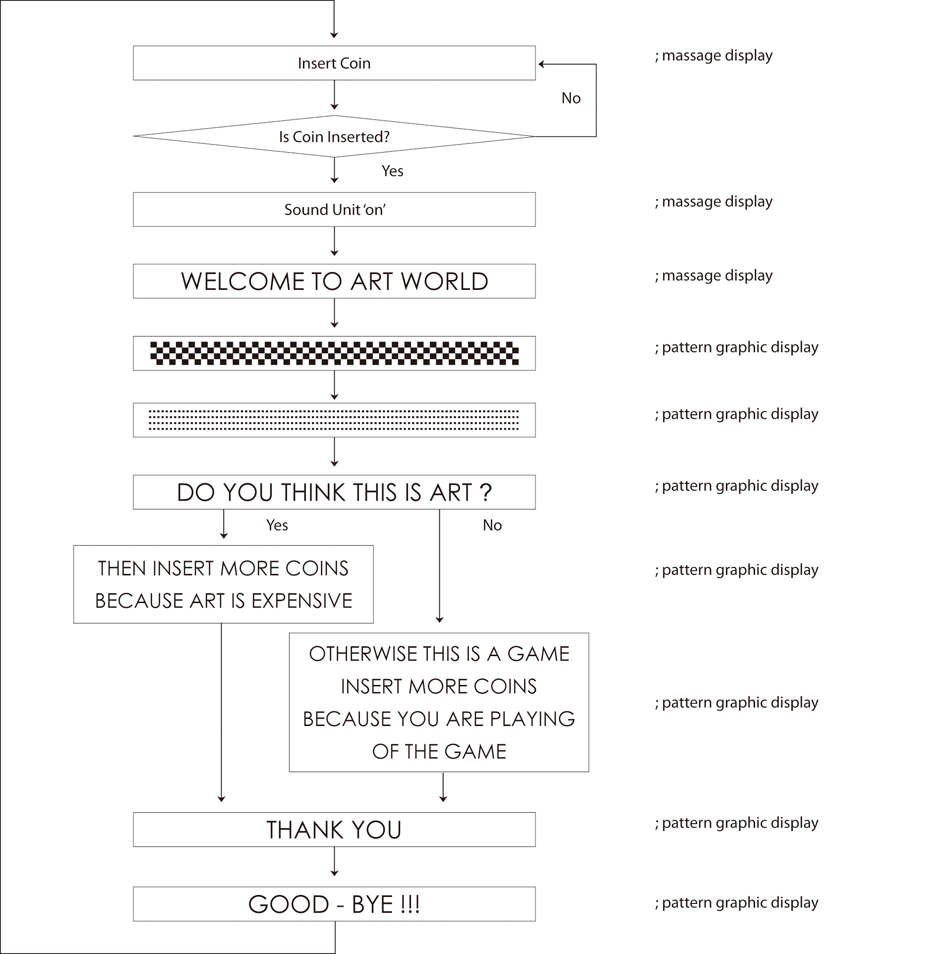
전시장의 입구는 예술의 영역과 非예술의 영역의 경계다. 그 경계에 버티고 서있는 이 작품은 예술의 세계에 진입하려는 사람들에게 간단한 질문들을 던지고 그 대답에 따라 반응한다. 이 작품은 여러개의 메시지가 프로그래밍된 전광판과 입장료를 넣는 구멍, 입장료의 투입을 감지하는 센서, 음향회로, 두개의 Yes/No 버튼으로 구성되었다. 관객이 입장료를 넣어야만 초기상태에 있던 작품이 메시지와 질문들을 던지게 되며, 또한 질문에 응답을 해야 다음의 화면으로 넘어가게 된다. 이러한 interactive적 작품을 통하여 관객이 다음의 문제들을 스스로 제기해 보기를 기대하였다. 예술은 공짜로 즐길 수 있는 것인가? 혹은 예술은 얼마간의 댓가를 치르면서까지 즐길만한 것인가? 보통 고귀하다고 여겨지는 예술은 돈과 어떤 관계가 있나? 관객이 미술관에서 보고자 기대하는 미술과 이 작품이 설치된 화랑에서의 작품들은 어떤 관계가 있는가? 나의 설치작업을 예술이라고 생각하는가? 다음은 이 작품의 논리적 흐름도(flow chart)와 Block Diagram이다.
The entrance of the gallery and the museum is the boundary between artistic territory and non-artistic territory. This work, standing on this borderline, is designed to give the audience some simple questions and to get the responses to those questions. It consists of a programed LED displayer, a slit for coin deposit, a coin deposit sensor , a sound circuit, and two yes-no-buttons. The displayer begins to display messages asking some questions from the initial state when it is activated by the coin, the admission fee, deposited into the slit. It moves on to the next stages only if it gets the answers given to the audience. With this interactive process, the audience will have the chance to raise the following questions for themselves. Can art be enjoyed for nothing? Is art worth paying for appreciation? What do the lofty works have to do with money? What is the relationship between the works the audience might expect to see in museums and the ones installed in this gallery? Do you think my installation is an art work? Followings are flow chart and block diagram of this work : * BLOCK DIAGRAM