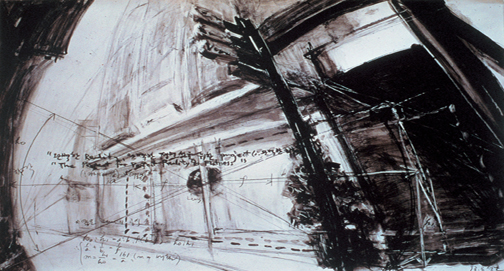
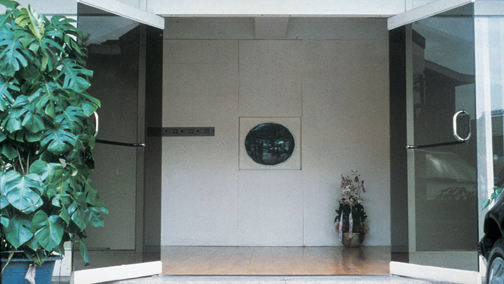
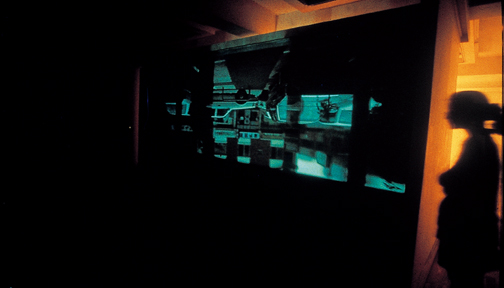
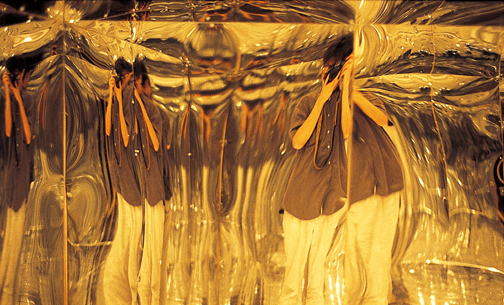
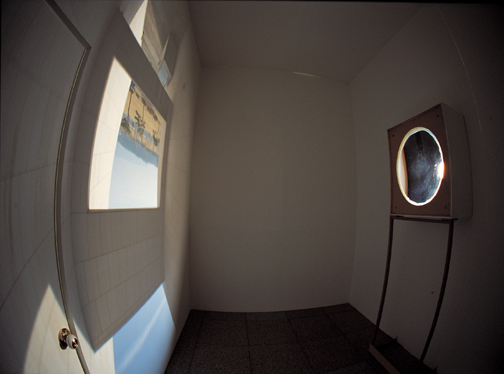
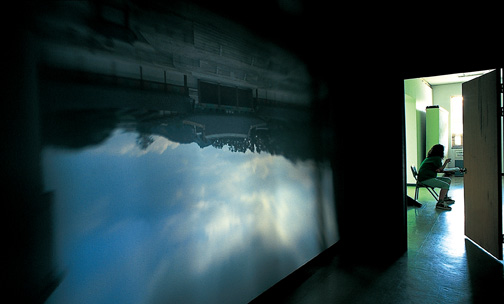
이 작품은 1993년의 개인전, 1996년 일본 후쿠오카에서 열린 Museum City Tenjin이라는 전시, 1999년 서울시립미술관(경희궁터)에서 열린 ‘사진은 우리를 바라본다’전 그리고 2004년 대전시립미술관에서 선보인 적이 있다. 93년의 개인전에서는 전시장을 두개의 방으로 나누었다. 하나는 거울방이고 다른 하나는 카메라방이다. 카메라방은 지름 60Cm의 수제(手製) 렌즈를 이용하여 전시장 반쪽을 거대한 카메라 옵스큐라로 만든 것으로서 관객은 카메라의 내부에 들어와 렌즈에 의해 벽면에 투사된 영상을 보게 된다. 사방을 아크릴 거울로 둘러싼 거울방 역시 관객이 내부에 들어갈 수 있도록 제작되었다. 이 두개의 방은 모두 실재와 영상, 즉 실제로 존재하는 것과 비춰진 것의 관계를 대조적으로 다루고 있다. 카메라방에 있어서의 실재는 전시장 밖의 거리풍경이며 관객이 카메라방의 내부에 들어감으로써 이미 비춰지고 있던 영상을 보게 되며, 거울방의 경우에는 관객이 거울방에 들어갈 때에야 비로소 영상이 생기게 된다. 다시 말해서 카메라방의 경우에 보여지는 대상과 보는 주체가 분리되어 있는 반면, 거울방에서는 대상과 주체가 동일하다. 두 경우 모두 시지각의 대상을 그대로 반영한다고 여겨지는 렌즈와 거울에 의한 영상을 보여줌으로써 관객에게 리얼리티란 무엇인가 라는 질문을 던지고 있다. 동시에 두 방의 영상이 모두 문자 그대로 평면 위에 펼쳐진 질량 없는 이미지를 보여준다는 점에서 완벽한 평면성을 보여주기도 한다. ‘리얼리티’와 ‘평면성’, 그것은 80년대의 우리 미술을 양분한 모토였다. 이 작품은 그것들에 대한 때늦은 농담일 수도 있을 것이다. 그 외에도, 테크놀로지가 근대미술의 변모에 지대한 영향력을 끼쳤다는 관점에서, 회화에 있어 그 최초의 막강한 경쟁자였던 카메라를 체험케 함으로써 테크놀러지와 미술의 관계에 대하여도 생각해 볼 수 있는 하나의 영점을 제공하고자 하는 것이 작품의 의도였다.
This installation is composed of two separate rooms in a gallery: a mirror room and a camera obscura(dark room). The camera obscura has one hand-made lens(60Cm in diameter) at one side through which the external images come in. The audience will look at the projected images on the other side of the wall. The mirror room is made of acrylic mirrors surrounding the walls with the viewer in it. On the one hand, both rooms are designed to deal with the problem of reality and image, the object and the projected. In the camera obscura, the landscape outside the gallery is the reality. The viewer will look at the projected images already existing when they get in. In the mirror room, the images emerge only when the audience gets in. While the subject and the seen are differentiated in the camera obscura, the subject and the objects are identified in the mirror room. However, both cases raise the question “What is the reality ?.” It is also intended to evoke the problem of ‘way of seeing’, and to give a chance to reflect it to Korean artists who had to adopt the style of Western art in the process of modernization. And, to top these, I wanted them to experience the camera, the first strong competitor of painting, expecting them to broaden their realm of thinking to the relationship of art and technology in this technology dominating century. On the other hand, the images in both rooms show literally flat images on the surface, thus suggesting perfect(?) two-dimensionality that modernism had sought with paranoia. This work could be little more than a joke on such outmoded problems as perspective, reality, and flatness. However, It would be worthy if they consider it as a “zero degree” to think about the meaning of our “reality” in the continuous influx of western art.